 3BrainAI
Who CRI is for
Construction lenders and real-estate collateral reviewers who need a traceable basis for human review.
For construction finance & real-estate collateral
The manager arrives with the report, its supporting records and one clear answer: what has been resolved, what remains open and who owns the next step. Construction Risk Intelligence (CRI) is being built to make that review position traceable.
The Brief is a private walkthrough of prepared review situations. Editorial evaluation access is free and individually reviewed; other professional access is agreed separately.
From a real place to a clear review position
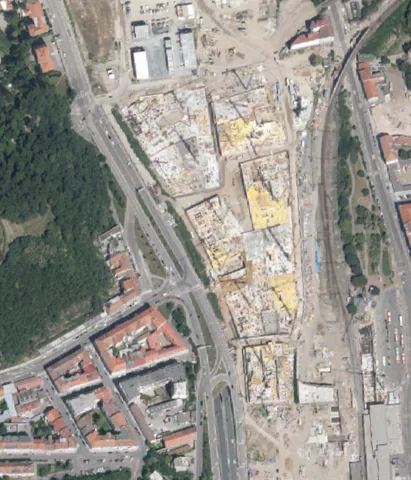
Smíchov City · aerial product reference 2025; exact acquisition day unverified. © ČÚZK / Zeměměřický úřad. Source and image limits.
Real historical context. Smíchov City, Prague · aerial product reference 2025; exact acquisition day unverified. © ČÚZK / Zeměměřický úřad. Source and image limits
Construction lenders and real-estate collateral reviewers who need a traceable basis for human review.
A short, versioned Evidence Pack that keeps the question, sources, uncertainty and next responsible step together.
Controlled-case Proof of Concept. Institution-specific work begins with an Evidence Readiness Check.
The continuation of the homepage story
The useful outcome is a defensible review position: the resolved scope is clear, and anything outside it remains open.
Drainage and paving are declared ready. The earlier accepted technical record covers earthworks only. The manager needs the adviser’s scoped response.
Pending · response requiredAfter the model adviser’s response is reviewed and accepted, the report records the resolved scope, its exclusions and the linked references. The manager can explain the position at the meeting.
Scoped acceptance · modelReal source context: the historical aerial view identifies the setting. It does not confirm drainage or paving.
Fictional records: SMI-M01 defines the scope, SMI-M02 the earlier earthworks acceptance and SMI-M03 the new declaration. SMI-M04 is a scripted adviser reply, not a real inspection.
Analytical proposal: request the dated reply for the same phase and revision; withhold imagery-based completion.
Human acceptance: the model reviewer accepts only the defined external-works update. A bank’s own decision and issued record remain separate.
Illustrative Smíchov review scenario. No actual financing arrangement, site inspection or construction finding is assigned to the real project.
Satellite observations and project records
3BrainAI is developing Construction Risk Intelligence (CRI) to bring dated satellite observations together with authorised project records in a versioned Evidence Pack. For a construction lender or collateral reviewer, the useful question is what the available evidence supports, what remains uncertain and which document or expert response is needed next.
Satellite imagery can provide dated context about visible changes at a site. It cannot, by itself, establish engineering completion, contractual acceptance or eligibility for a loan drawdown. CRI is currently in controlled-case Proof of Concept validation; institution-specific use requires an agreed scope and human review.
A separate professional section
Inspect the records, the reasoning and the role of human review.
Free editorial evaluation · Access reviewed individually.
Nine prepared model situations across Austria, Czechia and the Netherlands let you inspect the records, examine the question, reveal a scoped reply and see what human acceptance changes. They are prepared cases, not customer deployments.
Editorial evaluation access to The Brief is free and individually reviewed. Other professional access terms are agreed separately before an invitation.
Real locations and dated source context remain distinct from fictional documents and model review actions.
Request access to The BriefNo public sign-up or payment is taken on this page. The request is reviewed by a person.
Inspect the output format in an existing public record.
View the public exampleA private walkthrough of prepared situations, free for individually reviewed editorial evaluation.
Review the access processA separately scoped bank demonstrator and pilot explore your own question, roles, inputs and calibration.
Discuss an Evidence Readiness CheckThe bank demonstrator is intended for banking professionals; technical advisers participate through the bank’s process. Brief access does not purchase a bank pilot or imply acceptance of your institution’s case.
The review grammar
The four meanings remain distinct throughout the record.
What the synthetic or institution-provided question says should be tested.
What the controlled source record supports within a stated observation boundary.
What remains partial, unverified or outside the permitted inference.
A reviewable record, not an autonomous credit or payment decision.
Two bank questions. One evidence discipline.
Examine a milestone declaration against the relevant baseline and technical records. Keep the scope of a previous acceptance distinct from the work now presented for review.
Focus follow-up between formal inspections. Ask whether a dated change is relevant to the monitored asset or one of its dependencies, and whether the next step needs documents, an explanation or a site visit.
Imagery supplies dated, surface-visible context. It does not establish property value, legal title, occupancy, hidden condition or protection against theft.
Institutional fit
The workflow is designed to add a versioned evidence state between formal control points.
Existing controls – unchanged
CRI – designed to add between review points
Existing controls remain in place. CRI is designed to add a versioned evidence state between formal review points.
Source dates and reporting cadence depend on the agreed question; the Monday meeting is a narrative example.
The record you can inspect
Read the logic of a record: how its question, evidence, limits and human review fit together.
What is being reviewed — and within which scope?
The question, baseline and document authority.
The dated source and what it actually supports.
Connect the evidence to the question. State only what the available basis supports.
Identify missing evidence, uncertainty and what cannot be inferred.
A named reviewer can challenge or accept a claim within an explicit scope. The analytical proposal does not grant acceptance.
A schematic guide to reading a record. No case result or bank decision is represented.
Pending means the review is unfinished. Limited evidence means the basis is insufficient. Scoped acceptance records a human’s acceptance within a defined scope. Colour directs attention; it does not make a bank decision.
Target architecture
The source, analytical candidate and responsible human review have different roles.
Evidence suitability
Useful surface context depends on resolution, coverage, season and the actual review question. An aerial image alone cannot confirm a milestone.
Radar may add a different observation capability where it is suitable. Technical and project records remain necessary for questions an image cannot answer.
Insufficient observation cannot establish that nothing changed. The pack keeps the gap and the required follow-up visible.
Source context
The aerial view is a real historical source, used for orientation.
Smíchov City, Prague · aerial product reference 2025; exact acquisition day unverified. © ČÚZK / Zeměměřický úřad. Reprojected orthophoto prepared for this page. CC BY 4.0.
The real orthophoto was reprojected and resampled for display. It is used for orientation only: the fictional Phase A is not mapped, and the image cannot confirm its milestone.
Start with a useful question
Use the public record to understand the output, The Brief to inspect the prepared review experience, or an Evidence Readiness Check to discuss your own case.
Tell us your role and evaluation purpose. Editorial evaluation access is free and individually reviewed; other professional access is agreed separately.
Request access to The BriefBring the asset context, available evidence and a responsible review role.
Discuss an Evidence Readiness Check