 3BrainAI
More AI output raises a harder question.
What can an institution rely on, and how will a reviewer defend it later? We see an opportunity in the work between a generated answer and an accepted institutional record.
Investment thesis / the verification opportunity
Physical assets. Accountable review.
Source → scope → evidence → review.
Domain judgement connects analysis to a record a person can defend.
Image sources: Beeldmateriaal Nederland / PDOK · © ČÚZK · basemap.at. Credits, licences and historical limits.
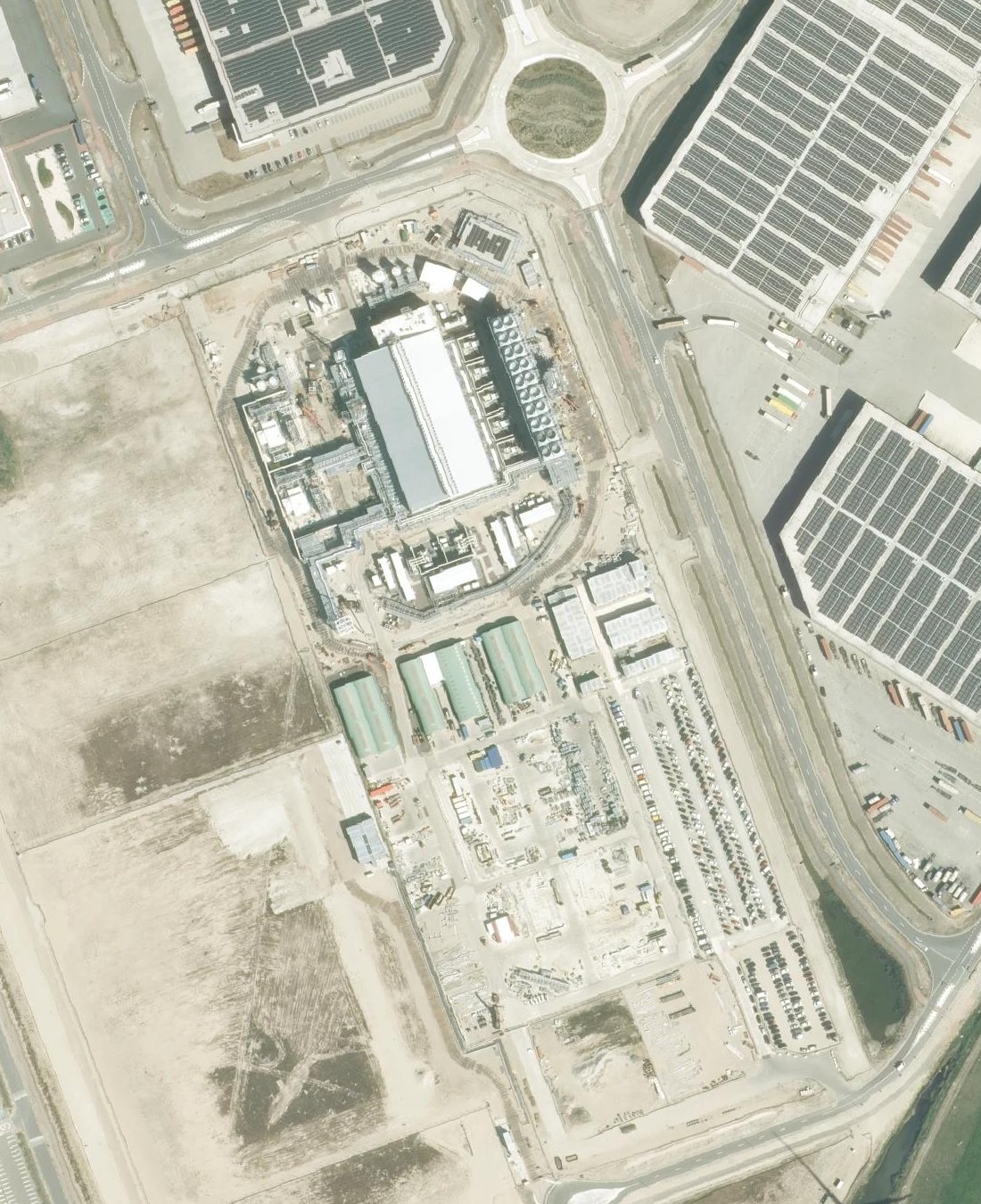
Real locations from our prepared reference cases. These images illustrate the domain; they do not imply client relationships or CRI adoption.
Holland Hydrogen I, Netherlands. PDOK 2025 orthophoto layer; exact acquisition day unverified. Beeldmateriaal Nederland / PDOK, CC BY 4.0. Source information.
Nová Zbrojovka, Brno, Czechia. Historical aerial; acquisition date unverified. © ČÚZK. CC BY 4.0. Source and terms. Prepared N2 display; no model boundary is shown.
CTP Vienna East, Bruck an der Leitha, Austria. Historical 2022 watermark; exact acquisition day unverified. Datenquelle: basemap.at, CC BY 4.0. Source information. Prepared N2 display; rear image is cropped in the fan.
These three aerial views provide geographic orientation for case studies based on real historical data. They do not establish completion, commissioning, asset condition or financing.
The investment story
The opportunity we are pursuing is a domain-specific verification workflow around model capability.
What can an institution rely on, and how will a reviewer defend it later? We see an opportunity in the work between a generated answer and an accepted institutional record.
General-purpose models and their providers can support evaluation. A bank-specific workflow still needs the authoritative project scope, usable source rights, technical competence and a named person who can accept or reject the result.
Construction finance brings three questions together: what has changed, which records support it, and who is responsible for reviewing the finding. We are developing CRI around that process, with institution-specific calibration and evaluation.
Demand, competitive advantage and willingness to pay remain to be tested through bank engagement and contracted pilots.
Specialist geospatial analysis and AI are central to the CRI technical approach, connecting satellite measurements with the requirements of bank review.
Explore the analytical principle →Founder-market fit
Dusan Prikryl combines owner-side responsibility for industrial and energy investments with technology integration, data and AI experience.
Read the documented founder backgroundThe customer-facing artefact
CRI is designed to retain the question, sources, uncertainty and review state in a short versioned record. The Evidence Console provides the working context around it.
An existing public illustrative record and prepared private examples make the record structure and reasoning boundaries inspectable.
Open the public recordA bank-specific sample tests source suitability, scope matching, reviewer usefulness and work against an agreed baseline.
Review the validation pathCommercial proof
The Brief is available now. A separate CRI demonstrator is in final development, with a demonstration planned for October 2026. Institution-specific configuration, calibration and evaluation require an agreed scope and responsible human review.
Evaluate review logic, source suitability and reviewer fit on a controlled case; institutional validation remains to be completed.
Paid bank pilots with a defined scope and an agreed project budget.
Recurring assisted workflow within an institution after agreed acceptance.
Each transition must earn its next step through evidence of reviewer fit, calibration and acceptance, followed by the required governance and procurement approvals.
Target commercial mechanism
Setup, monitored assets and assisted review form the intended model.
Target model, not a statement of contracted revenue. Invitation access to The Brief is free and separate from any contracted paid bank pilot.
What capital advances
The investment case is the combination of domain rules, source preparation, review software and the operating method around the Evidence Pack. Bank pilots test whether this becomes repeatable institutional work.
Private diligence covers milestones, commercial assumptions, funding use and entity/IP boundaries. Programme resources remain separate from investment capital; recurring revenue remains a target until contracted.
Request investor materialsExecution and capital
| Work | Proof requirement |
|---|---|
| Evidence preparation | Traceable source inventory, confirmed scope and suitability assessment. |
| Evidence logic and calibration | Versioned rules evaluated against suitable reference truth. |
| Product and governed delivery | A coherent review workflow with retained versions and explicit human authority. |
| Bank pilot evaluation | Agreed criteria, measured reviewer work and an explicit continue/refine/stop outcome. |
Financing supports staged execution against defined outputs. Programme resources and potential commercial income remain distinct from available investment capital; detailed assumptions belong in private diligence.
Company context
Current programme participation supports development. Historical company programmes are identified separately.
View programme contextReusable records, review gates and provenance are the intended foundation for adjacent workflows. CRI remains the current bank-focused product priority.
Read the Data Plane conceptPrivate investor discussion
Tell us your organisation, role and what you would like to assess. Private materials cover milestones, commercial assumptions, funding needs and entity/IP context.
We review the professional context before sharing appropriate investor materials.
Direct contact: investors@3brain.ai